Vasava (Bhil) community
Rajpardi, Jhagadia taluka, Bharuch district, Gujarat
Made by artisan Suresh Vasava and his family in Jhagadia. Each pot takes 4 days from throwing to firing.
Every purchase supports sustainable livelihoods, preserves traditional knowledge and strengthens women-led producer groups in this village. You are not buying a product — you are joining a community.
Warli Painted Clay Pot
by Jhagadia Artisan Cluster
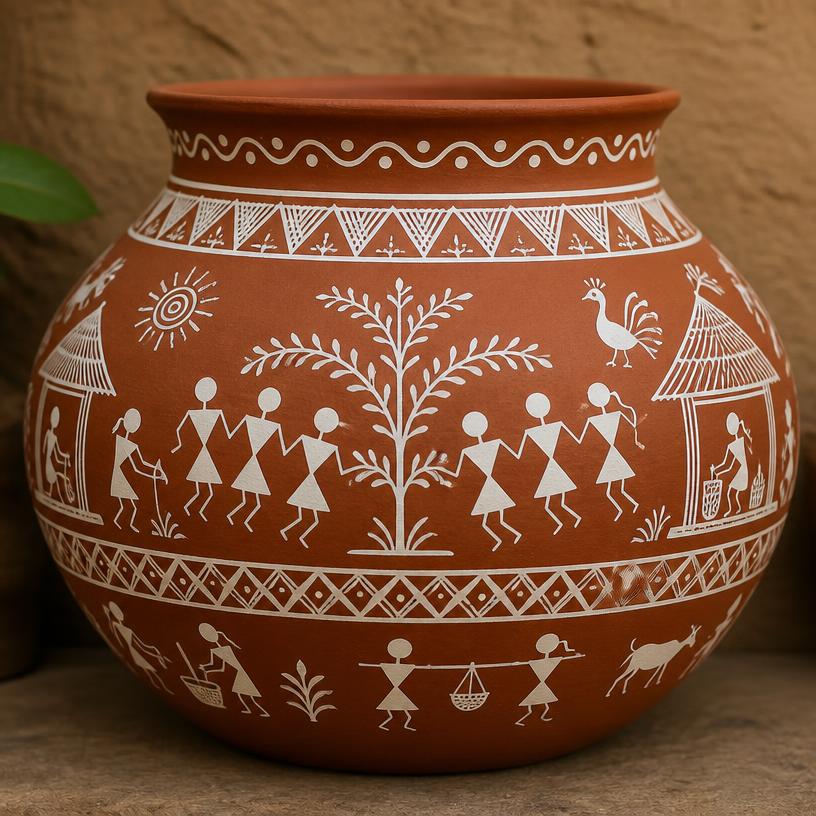
Hand-thrown terracotta pot painted with traditional Warli motifs telling the story of a village harvest.
"When a pot leaves my hands for a city home, my village goes with it. That is the only advertisement we have ever had."
100% of the profit reaches the artisan. Anudaan collects 0% platform fee on marketplace orders.
Want to do more than buy?
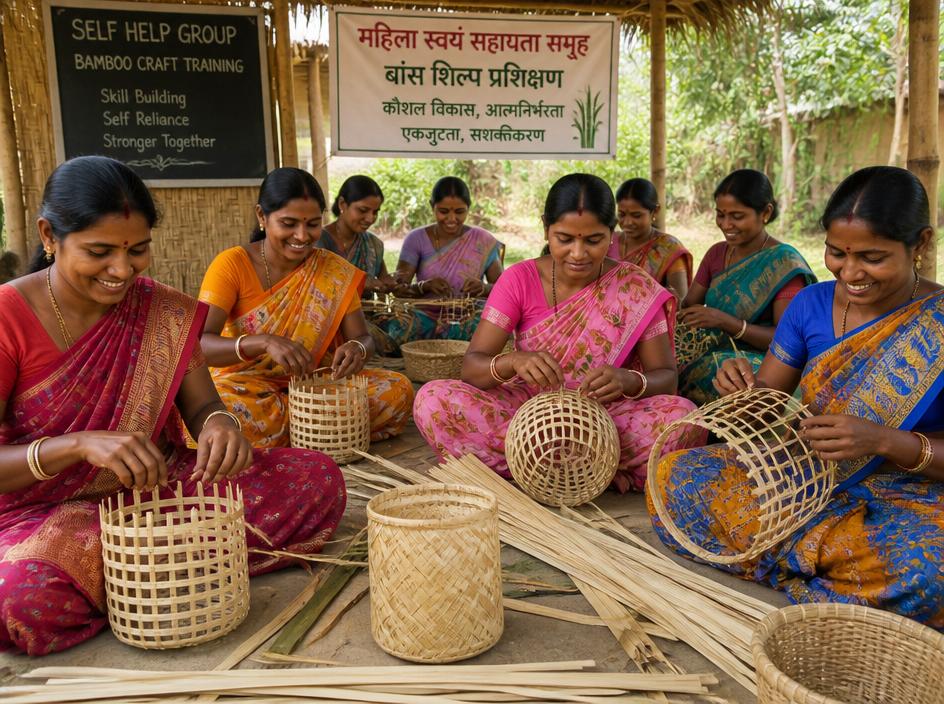
Bamboo craft training for tribal women self-help groups
Jhagadia, Gujarat · 60% funded
The story behind this piece
Suresh Vasava learnt to read clay before he learnt to read letters. His grandmother would press his palm into the riverbank soil near Rajpardi and say the earth tells you when it is ready — you only have to listen.
For two generations the family's pots travelled no further than the weekly haat, where they fetched ₹60 apiece. Plastic drums arrived, the haat thinned out, and Suresh's elder brother left for a chemical plant in Ankleshwar. Suresh stayed, because someone had to.
The white figures dancing around the belly of this pot are not decoration. They are a Warli harvest record — the men with the drum, the women in the tarpa circle, the bullock that ploughed that season. Every pot is a page of a village's year.
When you place this on your shelf, a kiln stays lit in Jhagadia, a daughter stays in school in Rajpardi, and a 3,000-year-old way of remembering does not quietly end in our lifetime.
How it's made
- 1Clay is dug from the Kim riverbank after the monsoon and rested for 15 days.
- 2The pot is thrown on a hand-turned wheel — no electricity, no mould.
- 3Sun-dried for 2 days, then fired in a wood kiln for 9 hours.
- 4Warli figures are painted freehand with rice paste and a bamboo twig brush.
What your purchase changes
- • ₹850 covers 4 days of fair-wage work for one potter family.
- • 12 sales keep the community kiln fired for a full month.
- • A share funds the Jhagadia artisan apprenticeship for tribal youth.